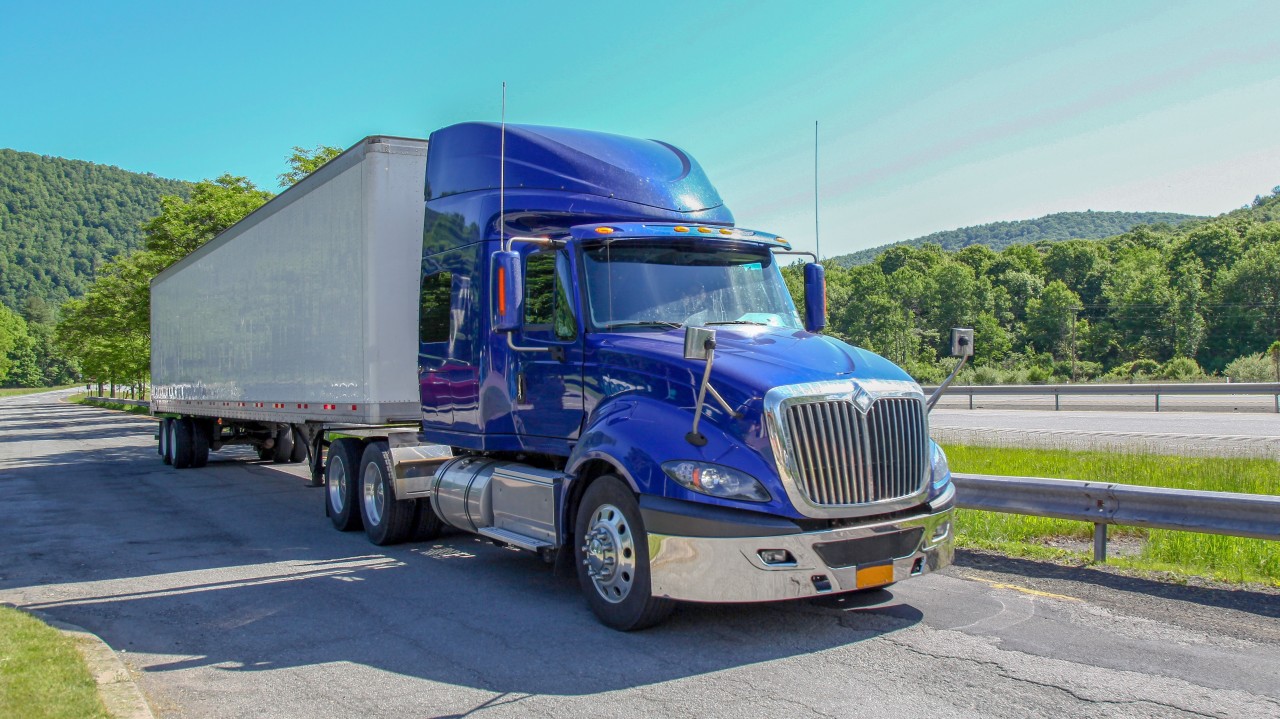
Who might find this guide helpful?
- Companies with commercial vehicles on their balance sheet
- A new owner or operator
- Companies adding trucks to their fleet
- Owners who are purchasing their first truck
- Drivers who are transitioning to become owners of a fleet
- Anyone looking to understand ongoing DOT compliance
Part 1: Getting Started
Congratulations. It is a significant milestone to purchase a truck and begin your journey in this industry. Whether you plan to expand your fleet in the future or operate at a small scale, the following steps are critical to remain compliant and legal when operating on commercial roads.
Before proceeding, it is important to acknowledge that requirements will understandably vary by operation and state. FMCSA compliance requirements may vary based on operation type, cargo, and whether a carrier operates interstate or intrastate, making individual assessment critical. If you are unsure at any stage of this process, contact Dakota Group for a compliance review before filing. This is not legal advice, we provide consultative compliance services and hands-on filing assistance. For particulars on your exact situation, give us a call.
DOT Numbers
DOT numbers are unique numbers assigned to your company by the DOT. Whilst not all trucks require registration with the FMCSA, most commercial operations are required to register with the FMCSA to track safety records and overall compliance standards. In addition, many states require intrastate commercial operators to obtain a DOT number. There are 39 states, and are listed below:
| 1. Alabama 2. Alaska 3. Arizona 4. California 5. Colorado 6. Connecticut 7. Delaware 8. Florida 9. Georgia 10. Hawaii | 11. Idaho 12. Indiana 13. Iowa 14. Kansas 15. Kentucky 16. Maine 17. Maryland 18. Massachusetts 19. Michigan 20. Minnesota | 21. Missouri 22. Montana 23. New Jersey 24. New York 25. Nebraska 26. Nevada 27. North Carolina 28. Ohio 29. Oklahoma 30. Oregon 31. Pennsylvania | 32. Puerto Rico 33. South Carolina 34. Texas 35. Utah 36. Washington 37. West Virginia 38. Wisconsin 39. Wyoming |
It is important to remember that a DOT number is not unique to each commercial vehicle, but rather the registered company or entity.
A DOT number will need to be obtained if any of these requirements match your current situation:
- Your company’s operation classification is the transportation of passengers or property in an interstate capacity (in other words, you are crossing state lines commercially)
- Your company is being compensated to haul cargo (this is called being a for-hire carrier)
- Your company will be transporting hazardous material *
- Your company will carry 9+ passengers for compensation *
- If not for compensation, your company will carry 16+ passengers *
- Your company is operating a vehicle with a Gross Vehicle Weight Rating (GVWR) of over 10,000 pounds
* Will require additional safety permits
The GVWR is the maximum total safe operating weight of a vehicle, set by the manufacturer, which includes the vehicle itself, passengers, cargo, fuel, etc.
If you are an existing company with a DOT number, in most cases, you can add commercial vehicles to your fleet. The catch is, you will need to update your records. This can be done by completing an MCS-150 form to reflect an updated fleet or vehicle count.
Even if your company will only be operating intrastate (in one state only), many states still require companies to obtain a DOT number. This is where it is important to check your state’s particular requirements. In this industry, it is wise never to assume; reach out to our team of professionals for assistance in determining your filing needs!
We recommend all business owners speak with a professional beforehand to minimize the mistakes first-time filers often make. Or if you are not sure if you need a DOT number for your operation altogether, speak with a Dakota Group compliance specialist to confirm your requirements.
Scenario 1: A New Owner-Operator
As a new business owner navigating this space, it is important to understand the complexities behind activating an authority. The following steps will help in most situations, but be aware of your operations, carrier types, and classifications, as well as local regulations, which will affect this process.
Step 1: Forming a business entity
- Decide and develop a business structure
- (Sole Proprietorship, Partnerships, LLCs, Corporations, etc.)
- Register and file all relevant business information with your state’s Secretary of State.
- Obtain an Employee Identification Number (EIN). This can be obtained from the Internal Revenue Service (IRS) and is a federal form of identification.
- Numerous other state and federal considerations apply in operating a business; we are here to get you started overall and ensure you are 100% managed with your DOT & FMCSA needs.
Step 2: Apply for a DOT Number
- If you choose to file this yourself, you will be prompted to complete a detailed application with the FMCSA’s Unified Registration System (URS)
- From here, you will be able to complete your first MCS-150 Form (a Motor Carrier Identification Report to collect registration information)
- After completion, your company will be issued a DOT number.
Step 3: Operating Authority
An Operating Authority is required if your company will be hauling freight, federally regulated goods, or transporting passengers for-hire across state lines. This is the case for most interstate commerce.
The three clear requirements during this process are set out as follows:
- Motor Carrier Authority: This is for the physical transportation of goods or moving someone else’s property from point A to point B for compensation.
- Broker Authority: if you are the one arranging transportation between a shipper and a carrier for compensation
- Freight Forwarder Authority: if applicable to your business model
As of recently, the FMCSA is in the process of removing the use of an MC (Motor Carrier) number. By tying your Operating Authority to your DOT rather than a separate MC number, this ultimately improves and streamlines the entire process when it comes to interstate regulations and trucking compliance.
Step 4: File a BOC-3 (Process Agent Designation)
- Required alongside an MC number before your authority can become active
- There are designated agents in each state to accept and forward legal documents on your behalf
- Must be filed by a registered BOC-3 processing agent
Step 5: Insurance
Insurance is an integral part of any business operation. Insurance is mandatory according to the FMCSA and must be filed correctly before your authority can become active.
| Operation Type | BIPD Insurance Requirement |
| General Freight (non-hazmat) | $750,000 |
| Household Goods | $750,000 |
| Hazardous Materials | $1,000,000 – $5,000,000 |
| Passengers (16+ seats) | $5,000,000 |
The FMCSA explains that insurance requirements are based on things like the entity type, operation classification, cargo specifications, or state overlays. These represent federal minimum liability thresholds and do not account for additional coverage that may be required by brokers, shippers, or state regulations.
However, these are only minimum requirements. In practice, this may be insufficient. In many cases, freight brokers often require higher coverage before approving a carrier to haul loads. For example, although the Operation Type of ‘General Freight’ is $750,000 in BIPD, it is not uncommon for a more standard requirement of $1MM to be set from major brokers. Large firms such as TQL and RXO are known for publishing such requirements as their standard. As a result, new carriers in particular should plan for insurance limits that exceed minimums to remain competitive and compliant within this space.
For insurance, two main forms make up this process—a BMC-91, which handles liability and a BMC-34, which handles cargo. Your insurer is responsible for filing this directly with the FMCSA and cannot be self-certified. Make sure you are clear and up to date with all that your insurance carrier requires of you during this stage.
Step 6: Authority Activation
This is the final step in this scenario, and it is imperative that companies wait for your Authority status to show ‘ACTIVE’ in the FMCSA portal before operating.
For new for-hire carriers, be advised that there is a mandatory waiting period. This is at least 21 days after all filing is complete. No one is more eager to get hauling than when they first get their authority, but waiting for full compliance is key. It is crucial that you do not operate before this or before final approval, as this may result in civil penalties up to the specified FMCSA maximums depending on the circumstances.
Scenario 2: Existing DOT Number
Adding commercial vehiclesto your fleet can trigger new filing requirements that often go unnoticed. To gain a better understanding of the steps below, be sure to review your compliance profile regularly or speak to a Dakota Group consultant. Update your company profile by filing an MCS-150 with Dakota Group!
Step 1: MCS-150
Any changes to your company, including your fleet, should be reported to the FMCSA using an MCS-150 form. Your company details on your portal must always be up to date and accurate.
Step 2: Notify Insurance Company
If there are any changes to your vehicle fleet, this information should be provided to your insurer so your policy is formally updated. Details such as the VIN, vehicle specifications, and the new vehicle’s intended use will be required.
In the case that your insurance is not kept up to date or cancelled, your insurance carrier may notify the FMCS,A and this will make booking loads with reputable brokers close to impossible!
Step 3: Marking New Vehicle
For any vehicle that is part of your fleet, all commercial vehicles must display the DOT number on both sides of the vehicle. This should be in clear letters at least two inches tall and in contrasting colours visible from at least 50 ft away.
Step 4: Unified Carrier Registration
A Unified Carrier Registration (UCR) is mandatory for companies involved in interstate commerce. It is an annual registration program, with fees based on the number of qualifying power units, not total fleet assets. Including a vehicle as part of your vehicle count under this registration may change your bracket and the fees required. These fees are set annually and are subject to change.
Step 5: IFTA and IRP Credentials
- IFTA: International Fuel Tax Agreement
- IRP: International Registration Plan
Again, if operating interstate, adding a new vehicle will require these two components to be updated. Ensure the new vehicle is registered under both IFTA and IRP.
Understanding DOT Activation
The following, along with company-specific variables such as state regulations or operation classification, is what keeps your authority ‘ACTIVE’:
- Active and current insurance policy details
- BOC-3 correctly filed (if applicable)
- Up-to-date MCS-150 information
Understanding DOT Deactivation
DOT Deactivation is a more common occurrence than many believe. These are the four common triggers for DOT numbers to be subject to this outcome, followed by the potential consequences and recovery.
| Trigger | Consequence and Recovery |
| Insurance Lapse | An insurance lapse may result in deactivation or suspension of authority until coverage is properly reinstated and processed. In most cases, your insurer will file a BMC-35 cancellation. To reinstate a DOT, you must re-file with your insurer and wait for processing. You may face delays in reinstatement. |
| MCS-150 Not Filed | Not filing an MCS-150 form, including if your Company Snapshot states ‘VMT Outdated’ (this is your Vehicle Miles Traveled) will result in your DOT number becoming ‘INACTIVE.’ To recover an ‘INACTIVE’ DOT number that is outdated or overdue, the filing of an MCS-150 form to satisfy the overdue form is required. |
| Out-of-Service Order | This form of deactivation is issued for serious safety violations, such as failing or refusing to take a mandatory drug or alcohol test. In addition to being ‘INACTIVE’, all operations are ordered to STOP until violations are corrected and verified by the FMCSA, with violations also remaining in the drivers clearinghouse record. |
| UCR Non-Compliance | Deactivation due to roadside citations, fines, and potential out-of-service orders upon inspection is standard. This often comes from crossing state borders without being compliant. This is where it is essential to immediately come into compliance, remain up to date and have accurate information under your company’s authority. |
Understanding Insurance with an existing DOT
As a significant ongoing expense for all involved in this industry, it is vital to understand what parts of your operations can affect premiums. Updated power unit counts, as well as safety records, cargo types, operating specifications, driver experience, and claims history, are just a few of the ways your insurer determines premiums.
Part 2: MCS-150 and UCR
MCS-150
What is it, and when do you file it?
The MCS-150 form is your Motor Carrier Identification Report. Used by the FMCSA to collect and maintain registration information, it more specifically details:
- What is your business
- What is your classification
- How many vehicles & drivers are operating
- Mileage for the previous year
- Business contact details
With the information submitted and filed in each form, this then feeds into the national carrier database for safety monitoring, compliance, and enforcement. All companies with a DOT number must file an MCS-150 form at least every two years, otherwise known as a biennial update.
Your Company Snapshot on SAFER is often the first thing brokers see when searching for your company’s DOT information. These administrative filings directly impact a carrier’s public SAFER profile, which can influence broker relationships, insurance underwriting, and audit risk.
Should you experience any changes in your company or if any details are no longer correct, it is crucial to file an updated MCS-150 within 30 days of those changes. This could include, but is not limited to, changes to legal names, addresses, contact information, or details about your company.
Information to ensure are 100% accurate before filing an MCS-150 form:
- Business Type
- DOT number
- Fleet size and driver count
- Company Legal Name & DBA Name
- Contact person and phone number
- The previous year’s mileage for all vehicles
- EIN
- Number and type of vehicles
- Drivers operating within/beyond a 100-mile radius
- Carrier operation (interstate/intrastate)
- Operation classification (e.g. for-hire, private, etc.)
- Cargo carried
The Complexities of MCS-150 Filings
The MCS-150 is more than a one-time form. It must accurately reflect your operation type, mileage, vehicle counts, and cargo classifications, and it must be updated whenever there are material changes to your business. Because compliance obligations evolve as fleets grow, many carriers reassess their filings annually rather than only during required biennial updates.
Common issues many operators encounter include outdated mileage figures, incorrect operation classifications, and failing to file updates after changes in fleet size, address, or ownership. Even carriers that are not actively operating interstate can be required to file, which often leads to confusion and missed obligations.
The Risks of Non-Compliance
An out-of-date or missing MCS-150 can result in your DOT number being deactivated, which can halt operations. This can prevent you from hauling freight, renewing insurance, completing registrations, or passing roadside inspections. Inaccurate filings can also negatively impact your SAFER profile and FMCSA visibility, triggering audits or additional scrutiny from regulators and insurers, and potential customers. Overall, it is important to recognise that an administrative oversight can quickly become an operational shutdown.
Dakota Group ensures your MCS-150 is filed accurately and on time, keeping your DOT number active and your SAFER profile clean. Whether you need to clear up company information, correct past filings, update changes for 2026, or proactively prepare for future biennial updates, our compliance consultants are here to help you stay operational, compliant, and ready to scale.
UCR
What is it, and when do you file it?
The Unified Carrier Registration (UCR) is an annual registration program for those involved in interstate commerce. These fees, based on your bracket, are gathered to primarily fund state motor carrier safety programs, cover education, enforcement, and inspections. At the end of the day, if you cross state lines commercially, you must register.
UCR Brackets (Please note these are vehicles with a GVWR of 10,001 pounds or more)
| Qualifying Power Units | Fee Bracket |
| 0 – 2 vehicles | Tier 1 |
| 3 – 5 vehicles | Tier 2 |
| 6 – 20 vehicles | Tier 3 |
| 21 – 100 vehicles | Tier 4 |
| 101 – 1,000 vehicles | Tier 5 |
| 1,001+ vehicles | Tier 6 |
- Registration for the following calendar year begins in October. If you plan to operate interstate from January 1, this registration must be completed before that date.
- UCR compliance is enforced during roadside inspections. Operating without a valid UCR registration may result in citations, fines, or enforcement action during roadside inspections.
The Complexities of UCR Compliance
UCR calculations are not always intuitive and may differ from how fleets typically think about vehicle counts, often leading to inaccurate filings. While the process behind the UCR sounds straightforward, errors often arise from miscounting qualifying vehicles, failing to account for power units that cross state lines intermittently, or selecting the wrong fleet tier. Changes in fleet size, ownership structure, or operational scope can also impact filing accuracy, making year-over-year compliance more nuanced than many carriers expect.
The Risks of Non-Compliance
Failure to properly file or renew your UCR can result in roadside citations, fines, delayed operations, and, in some cases, being placed out of service. Enforcement occurs most commonly at weigh stations and during roadside inspections, and non-compliance can trigger deeper regulatory scrutiny across your SAFER profile. Beyond fines, unresolved UCR issues can create downstream problems with insurance underwriting, audits, and future registrations, increasing both cost and operational risk.
Dakota Group helps carriers ensure their 2026 UCR is properly filed (which was due December 31, 2025) and that they are fully prepared for the 2027 UCR filing window opening in October 2026. Speak with a Dakota Group compliance consultant today to confirm your fleet tier, correct any past issues, and stay fully compliant as your operations grow.
Contact Dakota Group
We understand how confusing this guide may be at first glance. But it does not have to be challenging. Dakota Group specializes in helping all commercial vehicle owners and carriers navigate this landscape, where numerous DOT and FMCSA compliance requirements apply. We know how stressful it can be, so whether you are registering for the first time or maintaining ongoing compliance, we are here for you and your business. We are passionate about keeping our clients focused on their operations, so allow us to manage your filings and ongoing compliance needs to keep a squeaky clean profile.
Dakota Group Compliance Services
We Help All Commercial Vehicle Owners With:
- New DOT Number Registration
- MC Authority Applications
- BOC-3 Process Agent Filings
- MCS-150 Biennial Updates
- MCS-150 Changes
- MCS-150 Deactivation
- UCR Annual Registration
- Insurance Filing Coordination
- Authority Reinstatement
Don’t let paperwork get in the way of your operations. Contact us today.To read more, check out our blog at DakotaGroupUS.com. For any instant filing needs, go toFMCSA.COM and use our2026 UCR Registration Tool to file in less than 10 minutes. To book a call with our Director of Sales,Canaan Cossu-Frederic, use his calendar linkhere. All companies with trucks on the balance sheet must file their UCR to ensure their registration remains active and in service
This guide is for informational purposes only and does not constitute legal advice. Regulations change—always verify current requirements with FMCSA or consult with a compliance professional.